
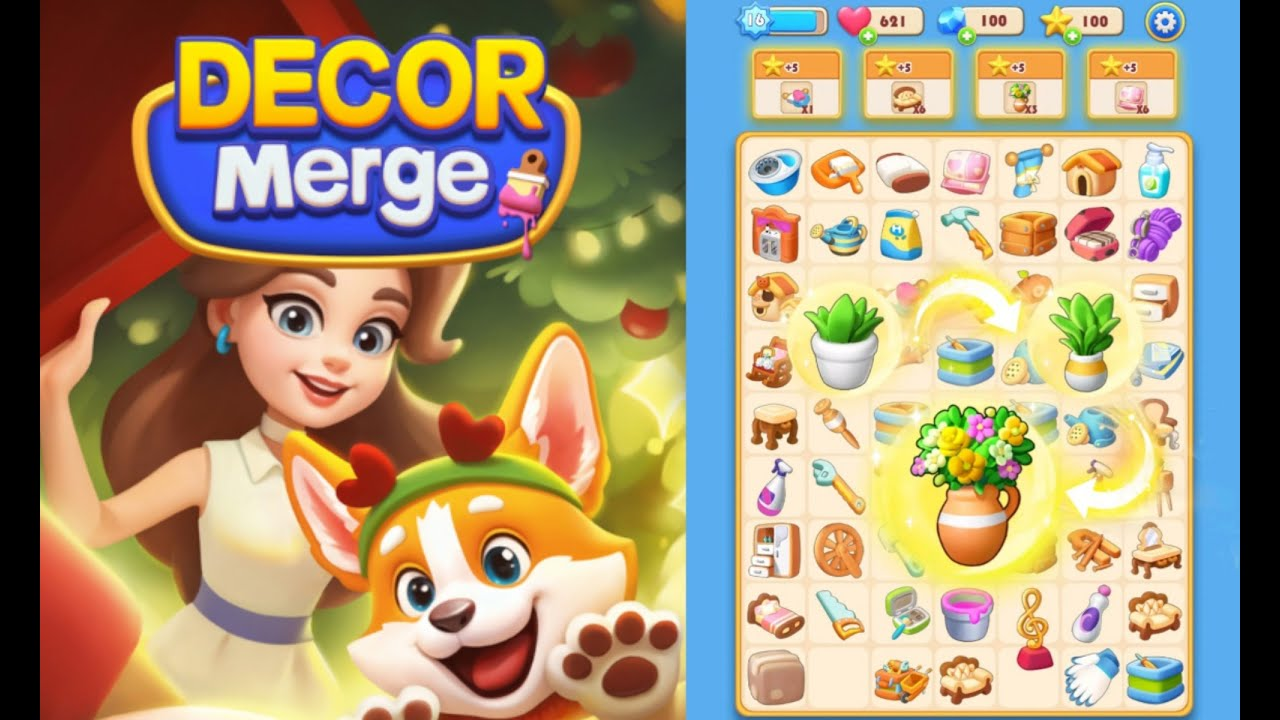
Managing your inventory space in Decor Merge is one of the most important factors when it comes to progressing efficiently and unlocking rewards. Whether you’re pushing toward milestone goals or simply trying to clear your board, running out of space can quickly stall your progress. This strategy guide delivers expert advice to help you master inventory management, avoid common pitfalls, and progress through the game with minimal spending or wasted effort.
Understand and Respect Inventory Limits
Your inventory in Decor Merge is limited by both the number of available slots and how you actively manage the organization of your stored items. Every slot used unnecessarily can slow down your merging process and make it harder to complete key tasks. Early on, familiarize yourself with the inventory cap and get in the habit of only storing items that are essential for immediate or near-future merges. Avoid the temptation to hoard low-level items “just in case”—space is far more valuable than almost anything you could keep for later.
The best approach is to treat inventory slots as a premium resource. Before storing any item, ask yourself if you will truly need it in the next merge cycle. Many players discover that by strictly limiting what goes into storage, they maintain more flexibility and fewer bottlenecks in the mid-game, especially when dealing with event and quest progression.
Optimal Board Organization: Group and Prioritize
Efficient management doesn’t just happen inside your inventory—it starts on your game board. Create distinct sections or rows for different item types or merge chains. For example, reserve the left side for quest items, middle for active production, and the right for “waiting” pieces. This allows you to visually track merge progress and spot immediate priorities.
You can use small patterns or arrangements to batch similar items, making it much faster to merge up as soon as possible. Keep the following practices in mind:
- Cluster mergeable items together to avoid scattering and accidental merges.
- Leave space for new drops by producers to prevent item overlap.
- Rotate out low-level items as soon as they are mergeable, instead of filling your inventory with them.
Grouping items strategically reduces the mental load and smooths the workflow, helping you identify which mergers will free up precious space. For additional techniques on board utilization, consider warehouse organization strategies—many principles also apply to digital inventory challenges like Decor Merge.
Efficient Progression: Merge Tactics and Milestone Planning
Progressing through Decor Merge efficiently is largely about timing your merges and focusing on milestone objectives. Every time you hit a merge milestone or complete a collection, you typically unlock new board space, earn in-game currency, and sometimes gain unique rewards such as rare items or boosters.
Here’s how to streamline your progression without overspending or wasting energy:
- Plan merges in groups of five whenever possible. Merging five of the same item yields an extra piece versus merging just three, significantly improving your long-term efficiency and freeing up more space with fewer moves.
- Prioritize quest and event items first. These often occupy a lot of space, and their completion opens up more room and provides resources for progressing to higher levels.
- Avoid storing incomplete merge chains. If you can complete a merger on the board, do it promptly, rather than shuffling parts into inventory.
- Map out your inventory before collecting rewards. Always make sure you have at least one or two free slots so new items don’t create a jam. If you expect a reward to drop multiple items, clear extra space accordingly.
In many cases, players find themselves stuck when focusing on too many different merge chains at once. Instead, narrow your energy and board space to one or two objectives, finish them, and then move on to the next. This method aligns your merges with your activity goals and makes it easier to hit milestones quickly. If you want to go further with game strategy, you can learn more in our article on the best item combinations to boost your progress.
When (and When Not) to Use Gems or Premium Currency
Premium currency, such as gems, might be tempting for players looking to accelerate their progress or expand inventory space, but these resources should be spent with caution if you want to maximize value. Only consider spending gems to expand inventory slots in two situations: if a special timed event requires rapid collection of rare items, or if you are frequently capping out and stalling your board progression even after applying all other inventory management best practices.
Otherwise, focus your gems on boosters or unique event rewards that are difficult to obtain through normal gameplay. Avoid using gems to skip timers or refresh basic inventory, as the returns are typically low for the investment. Most players can efficiently progress through the majority of the game’s challenges with careful organization, merging, and patience without spending premium currency at all.
If you do spend, always set a hard daily or event-based cap to keep your budget and progression goals aligned. Many long-term players recommend saving premium currency until late-game, when space pressures are highest and the extra slot or merge can provide more value per gem.
Biggest Inventory Management Mistakes to Avoid
Efficient inventory management is as much about avoiding bad habits as it is about practicing the right techniques. Be aware of these common traps that can clog up your storage and delay your progress:
- Hoarding low-level or duplicate items. Early in the game, it’s easy to think you’ll need every piece, but unused low-level items quickly fill storage with little payoff.
- Failing to clear space before collecting quest or event rewards. Overflowing with new drops can overwhelm your board and force you to spend gems unwisely.
- Storing incomplete chains or rarely-used items. If something doesn’t support your immediate merging goal, it’s better left on the board for now or merged away.
- Neglecting limited-time event inventory. Always give priority to event items, as missing a merge within the timer can set you back significantly.
The underlying theme is this: space is more precious than almost any item. Don’t let inertia or “just in case” thinking block your ability to move forward. Regular inventory audits—checking stored items and reassessing their value to your short-term merge goals—keep you agile and ready for surprise rewards or event changes.
Advanced Space-Saving Techniques
As you advance, you’ll need to apply more refined strategies to get the most from every slot. Consider these advanced tips:
- Chain merging: Merge up several low-level items in sequence to produce a higher-value piece, then immediately use or store only that piece, rather than filling storage with in-between steps.
- Only store mid-to-high level items: If an item is too common or easy to reproduce, leave it on the board until you’re ready for a bigger merge.
- Leverage event timing: Some events include temporary inventory expansions—use these to clear out space and finish event merges more efficiently.
- Use inventory space for value, not “someday” possibilities: Set a rule for yourself that every item in inventory has a specific, near-term role.
- Recycle or sell surplus items: If the game allows, trade or convert less useful pieces into coins or progress, rather than stockpiling them.
Advanced players also recommend preparing for milestone unlocks by having as many board spaces free as possible, so you can immediately capitalize on new opportunities and rare drops. Make a habit of freeing up space before every major event or board expansion.
Conclusion: Mastering Inventory for Efficient Progression
Efficient inventory management in Decor Merge directly translates into faster progression, more rewards, and a smoother gameplay experience. By respecting your storage limitations, organizing your board, focusing merges around milestones, and resisting the temptation to hoard or overspend, you can keep your momentum up at every stage of the game. Make proactive inventory decisions, map your progression targets, and adapt your strategies for each new challenge. With these expert tips, you’ll never find your progress stalled by a full or disorganized inventory again.